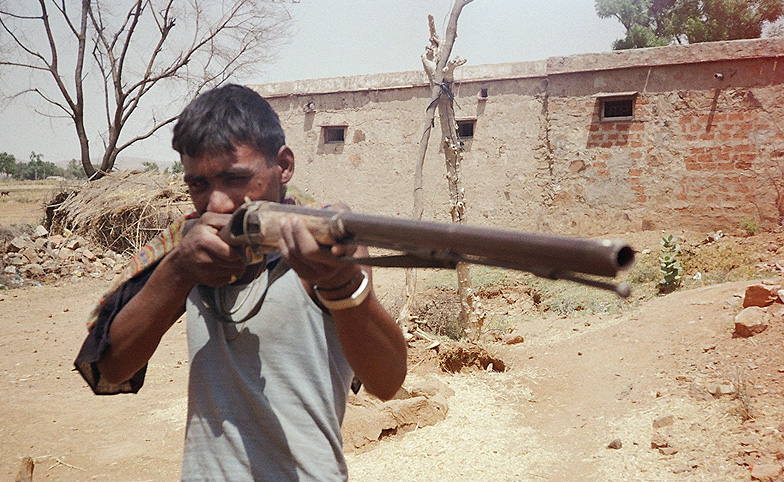
Following the work with the snake charmers, I began work with another community, in 2004 maing frequent trips to rural Rajasthan. My study was focused on families around Sariska National Park, a park that had acquired a notorious reputation for having lost all its tigers to hunting. It was alleged that a handful of hunters from the Bawaria community had one by one poached all the tigers of Sariska, until they were none left. The Bawarias were living in a pitiable condition with no ration cards, no roof over their heads, and on the brink of poverty. ’ It was the tag of a Criminal Tribe that was introduced by the British under the Criminal Tribals Act of 1871 that earned this community a bad reputation. In comparison to the charmers who at least had a roof over their heads, the condition of the Bawarias was miserable. Initial research showed that most of them led a semi-nomadic life on the fringes of agricultural fields. They were regularly beaten and hounded by upper castes and rounded up by the police in case there was a theft in the area. In my initial interviews, I recorded instances of false arrests, torture and beatings in the wake of even petty theft as a regular experience for most men from this community because of being labeled ‘criminals by birth’. I put together a report which we submitted to the government suggesting different interventions which could be made, and to improve their social and economic status. It was heartening to note that reccomendations from my research were finally incorporated in official government records, in Project Tiger’s analysis on what can be done with hunting communities that live around National parks